





Operations along the East-West crude pipeline have been suspended temporarily in the country of Saudi Arabia as an act of precaution against hostile attacks on this pipeline in the areas of Riyadh and Medina.
According to the Saudi Energy Ministry, a quick team of emergency response forces was sent immediately to inspect the affected area and assess the damage caused to the structure. Smoke clouds were observed through the satellite monitoring system and thermal images due to attacks in the vast desert area from Medina to Mahd adh Dhahab. Further information and a formal statement will be made when the process of inspection is complete.
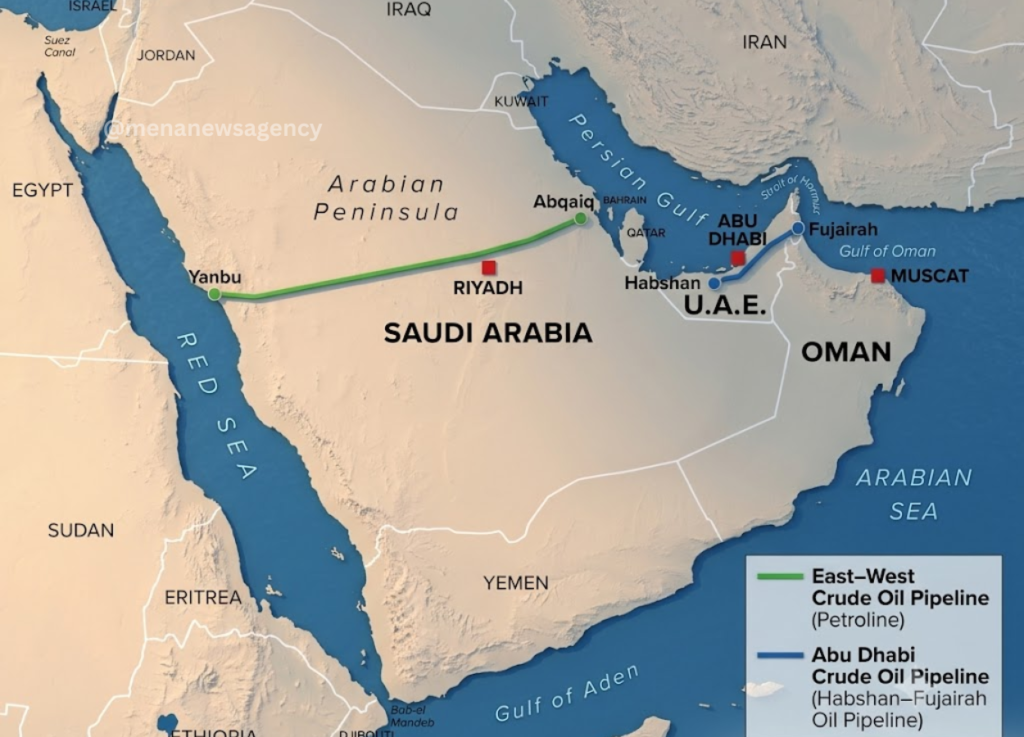
This pipeline system, also known as Petroline, acts as a vital artery for Saudi Arabia to transport crude oil from the eastern production facility in Abqaiq to the Red Sea at Yanbu. By transferring millions of barrels daily across the peninsula, the facility enables state energy exporters to avoid shipping bottlenecks through the vulnerable Strait of Hormuz chokepoint.
The unexpected disruption comes amid heightened regional maritime friction, where escalating drone and missile incursions have threatened energy transportation channels across southern Red Sea transit corridors. Industry analysts note that while immediate market supplies remain buffered, targeting alternative overland corridors elevates fear premiums across global commodities exchanges. International benchmark Brent crude hovered around $104.44 per barrel following news of the suspension.
The closure underscores growing vulnerabilities for alternative energy logistics within the Arabian Peninsula. Previous operational disruptions along the 7-million-barrel daily capacity network were rapidly contained, but simultaneous security challenges near key maritime choke points create added logistical complexity for international refiners. Energy monitoring agencies continue to track vessel loadings out of Yanbu to gauge potential output adjustments.
The East-West pipeline, constructed in the 1980s as a strategic hedge against regional maritime conflicts, remains vital to global energy security. Any sustained disruption to this critical bypass corridor severely restricts Saudi Arabia’s ability to maintain stable crude exports to international markets.