





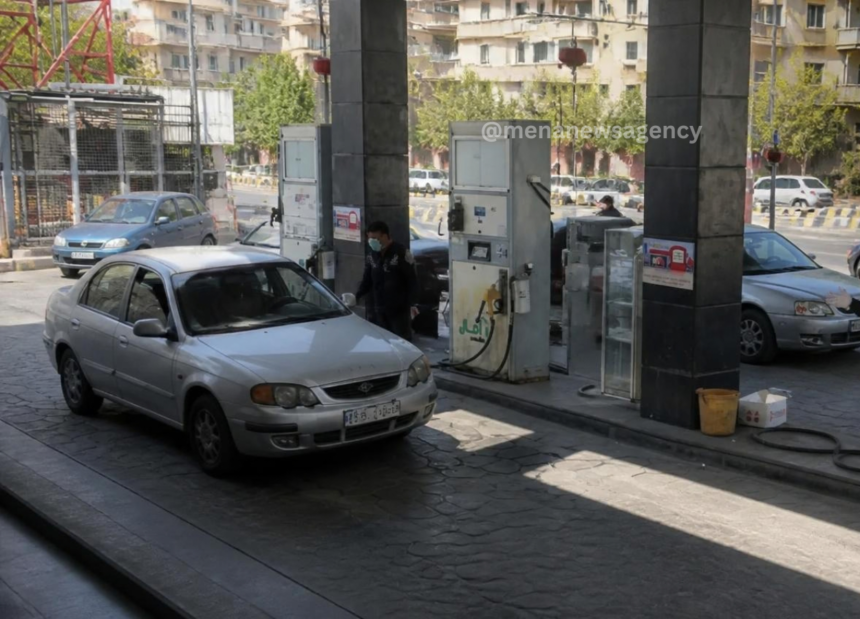

The energy authority of Syria has launched a tiered system pricing of diesel that aims to ease the financial burden of families, agricultural sectors, and industries following recent increases in fuel prices due to refinery maintenance and volatile international oil market conditions. Syria Multi Tier Diesel Pricing
In a joint press conference, the country’s energy minister Mohammad Al-Bashir and CEO of Syrian Petroleum Company Youssef Qablawi have revealed the system, in which the selected beneficiaries will be entitled to lower prices of diesel, whereas ordinary fuel prices will be kept lower than production costs. Under the new system, basic users such as agricultural and heating consumers will purchase diesel at the price of 115 Syrian pounds per liter.
Another tier of diesel at 150 Syrian pounds per liter will serve productive economic sectors, public sector, and industries. Meanwhile, standard-grade diesel will remain capped at 175 Syrian pounds ($1.43) per liter, below its actual market procurement cost of 206 Syrian pounds ($1.69).

The move follows direct consultations between President Ahmad Al-Sharaa and the energy ministry aimed at enhancing national energy security and stabilising domestic markets. Public friction mounted earlier after necessary price adjustments coincided with a major temporary shutdown at the main Baniyas refinery. The facility overhaul, vital after prolonged operation, aims to modernise key processing units and raise overall capacity to approximately 130,000 barrels daily.
To offset supply constraints during the maintenance period, officials are reactivating several small-scale processing facilities with a combined capacity of 35,000 barrels per day. Production from these units will be strictly directed toward the lowest-priced subsidized tier. The ministry has also secured supplemental energy resources in coordination with foreign partners to maintain the intermediate supply tier.
Qablawi emphasized that the distribution system will operate via designated service stations through close coordination between state energy managers and local governorates to ensure steady market delivery. Authorities maintain that diversifying fuel grades allows critical operational sectors to maintain productivity while containing consumer expenses amid persistent global energy disruptions, inflated freight costs, and heightened international shipping risks. MENA News Agency